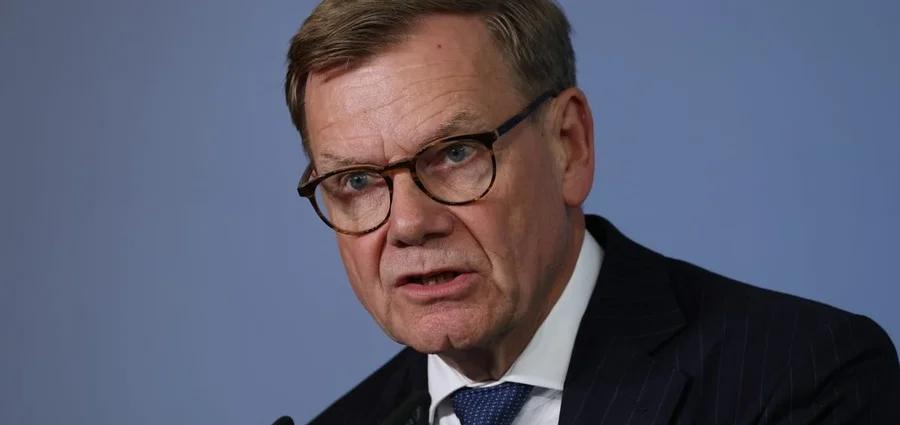
German Foreign Minister Johann Wadephul engaged in a tense, unscheduled meeting with his Russian counterpart Sergey Lavrov at the United Nations on Saturday. This significant encounter, lasting roughly thirty minutes, marks the first such high-level discussion since Russia’s full-scale invasion of Ukraine in 2022. Wadephul candidly addressed recent hostilities, including a drone incident in Germany.
Speaking to German public television ZDF, Wadephul described the talks as “intense.” He acknowledged a lack of agreement on critical issues. The German Foreign Minister specifically condemned the drone attack targeting a Ukrainian cargo plane at Leipzig airport. He asserted Germany’s clear stance that such “unacceptable escalation” would not be tolerated.
Wadephul issued a strong warning against Russia continuing its current trajectory. He affirmed Germany’s readiness to defend itself and retaliate if necessary. A German official, speaking anonymously, later confirmed Wadephul urged the Russian Federation to abandon its “dangerous path of escalation” against Germany, Europe, and NATO.
Moreover, the German Foreign Minister denounced Russia’s “increasingly targeted aggression” against Ukrainian civilians. He highlighted the immense human cost, noting tens of thousands of Russian soldiers die monthly in a “hopeless war of attrition.” Meanwhile, the Russian economy continues to face severe challenges.
This crucial meeting unfolded amidst escalating friction between Berlin and Moscow. Earlier this month, Germany accused Russian intelligence of orchestrating the Leipzig drone attempt. Consequently, Berlin imposed sanctions, closing Russia’s consulate in Bonn. Moscow promptly retaliated with similar measures, including the closure of Germany’s St. Petersburg consulate.
The two nations also clashed at a UN Security Council meeting this week. There, Wadephul criticized “Russia’s reckless and dangerous escalation in Europe.” Conversely, Lavrov accused Europe of employing “criminal methods.”
During Saturday’s discussions, Wadephul reiterated Germany’s unwavering commitment to supporting Ukraine. He clarified that “hybrid attacks” like the Leipzig incident would not diminish this resolve. However, these actions would further damage already strained bilateral relations with Russia.
The Russian side offered no immediate detailed account of the meeting. Russian foreign ministry spokesperson Maria Zakharova instead referenced a controversial report. This document questions the authenticity of the Bucha massacre and reportedly featured in the ministerial talks.
Discrepancies quickly emerged regarding the meeting’s initiation. Zakharova claimed Wadephul requested the discussion. Yet, Wadephul told ZDF he agreed to the meeting after Lavrov signaled a willingness to talk via intermediaries.
This high-stakes dialogue occurred against a backdrop of renewed U.S. and Western efforts for peace in Ukraine. Just a day prior, Wadephul welcomed a U.S. invitation for Russian President Vladimir Putin to the G20 summit in Miami. He termed it a “litmus test for Putin” and an “opportunity” that must be seized. Wadephul added a caveat, suggesting a ceasefire is vital for serious negotiations.